
 Image 1 of 3
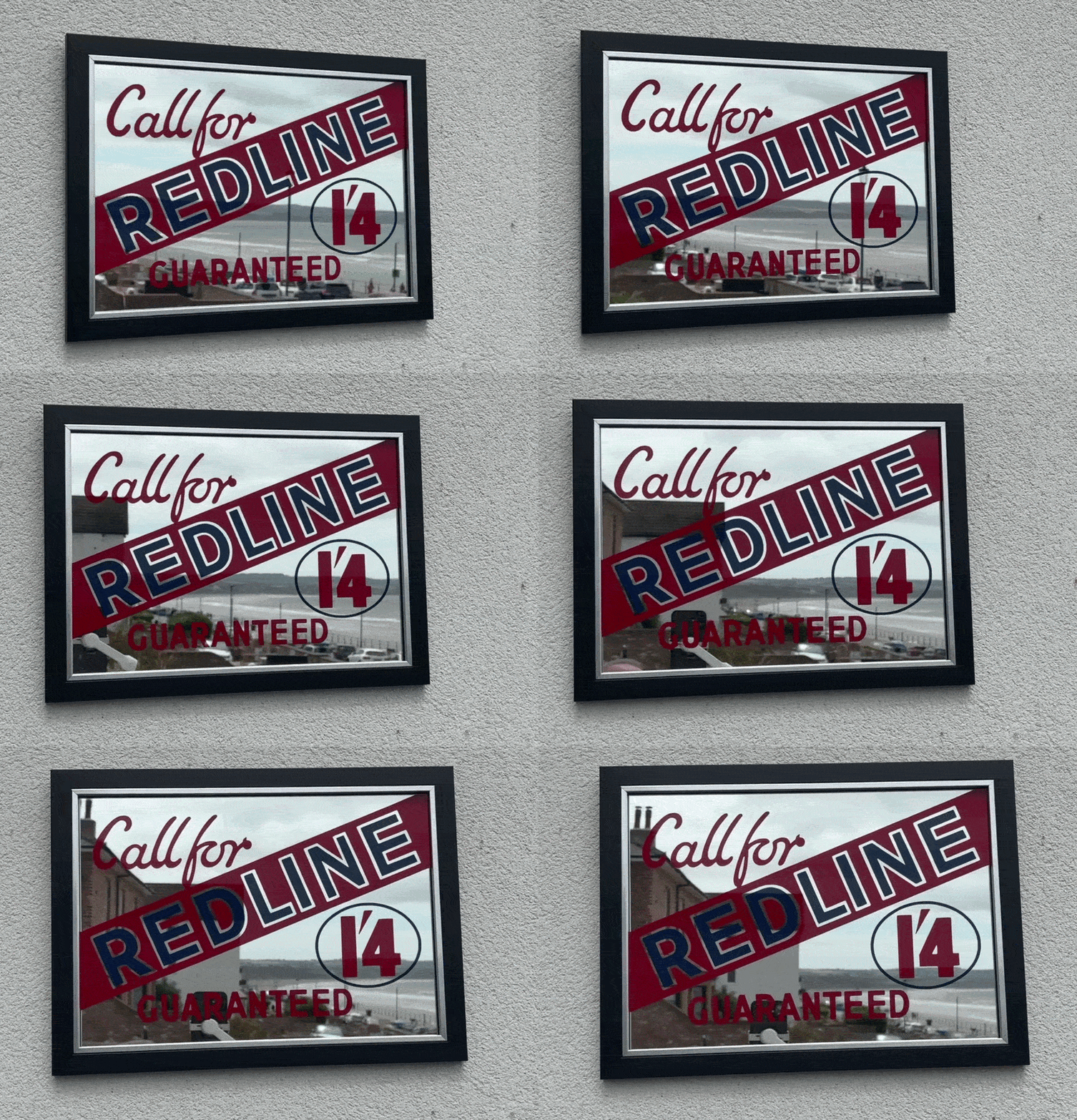 Image 2 of 3
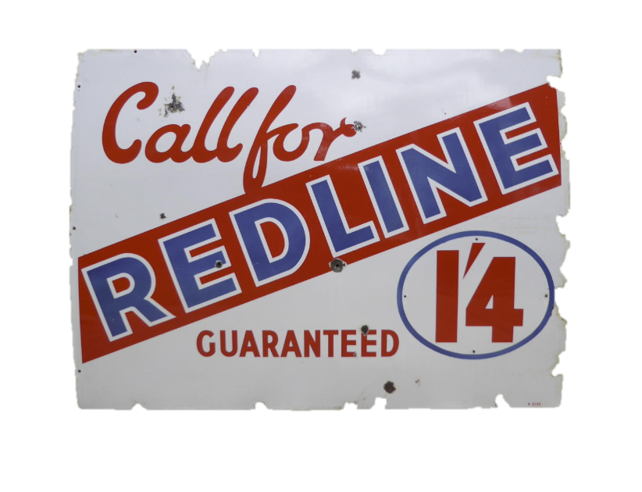 Image 3 of 3
The Redline Motor Spirit Company began as the Union Petroleum Products Company, supplying fuel across Britain. In 1924, it officially rebranded as Redline, operating out of headquarters in Haymarket, London. As an aggressive independent competitor in the early motoring boom, Redline carved out a major market share before merging with the Glico Petroleum Company in 1931 to form Redline-Glico. The brand was eventually absorbed by the Anglo-American Oil Company (Esso) and phased out.
This enamel sign dates precisely to the mid-to-late 1920s. The "1/4" text denotes the retail price of one shilling and fourpence per gallon. Because fuel prices fluctuated constantly, the company manufactured these signs with a blank space or a detachable bracket system, allowing station owners to bolt on updated tin price panels, such as 1/4½ or 1/5.
Like other brands of the era, the word "Guaranteed" was a vital marketing promise. It assured sceptical motorists transitioning from traditional two-gallon cans that the newly invented mechanical curbside pumps delivered pure, unadulterated fuel and an exact legal gallon.
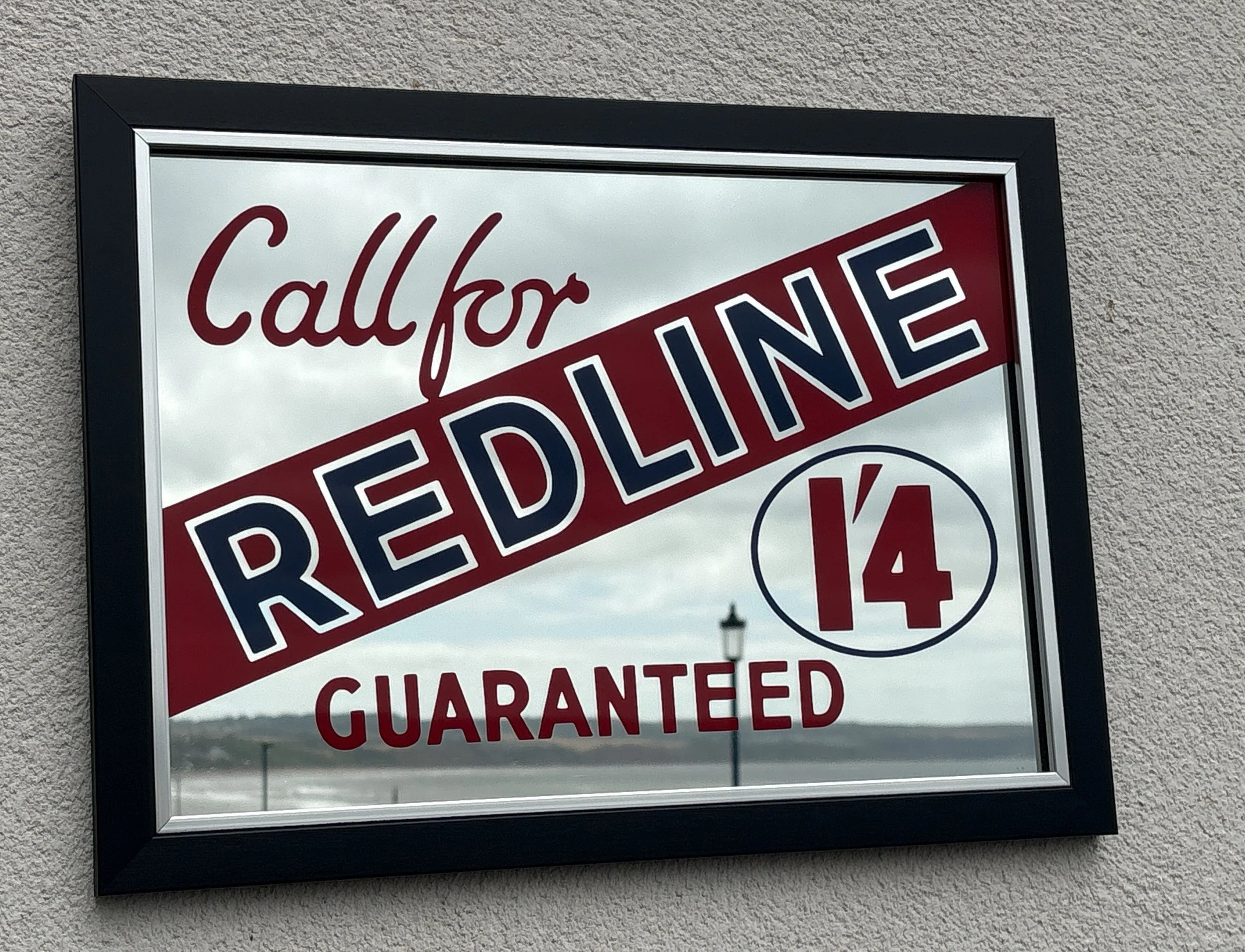
Here we’ve taken an image of a worn enamel sign, digitally corrected it and reproduced it as a decorative reverse glass mirrored sign.
The Redline Motor Spirit Company began as the Union Petroleum Products Company, supplying fuel across Britain. In 1924, it officially rebranded as Redline, operating out of headquarters in Haymarket, London. As an aggressive independent competitor in the early motoring boom, Redline carved out a major market share before merging with the Glico Petroleum Company in 1931 to form Redline-Glico. The brand was eventually absorbed by the Anglo-American Oil Company (Esso) and phased out.
This enamel sign dates precisely to the mid-to-late 1920s. The "1/4" text denotes the retail price of one shilling and fourpence per gallon. Because fuel prices fluctuated constantly, the company manufactured these signs with a blank space or a detachable bracket system, allowing station owners to bolt on updated tin price panels, such as 1/4½ or 1/5.
Like other brands of the era, the word "Guaranteed" was a vital marketing promise. It assured sceptical motorists transitioning from traditional two-gallon cans that the newly invented mechanical curbside pumps delivered pure, unadulterated fuel and an exact legal gallon.
Here we’ve taken an image of a worn enamel sign, digitally corrected it and reproduced it as a decorative reverse glass mirrored sign.