
 Image 1 of 3
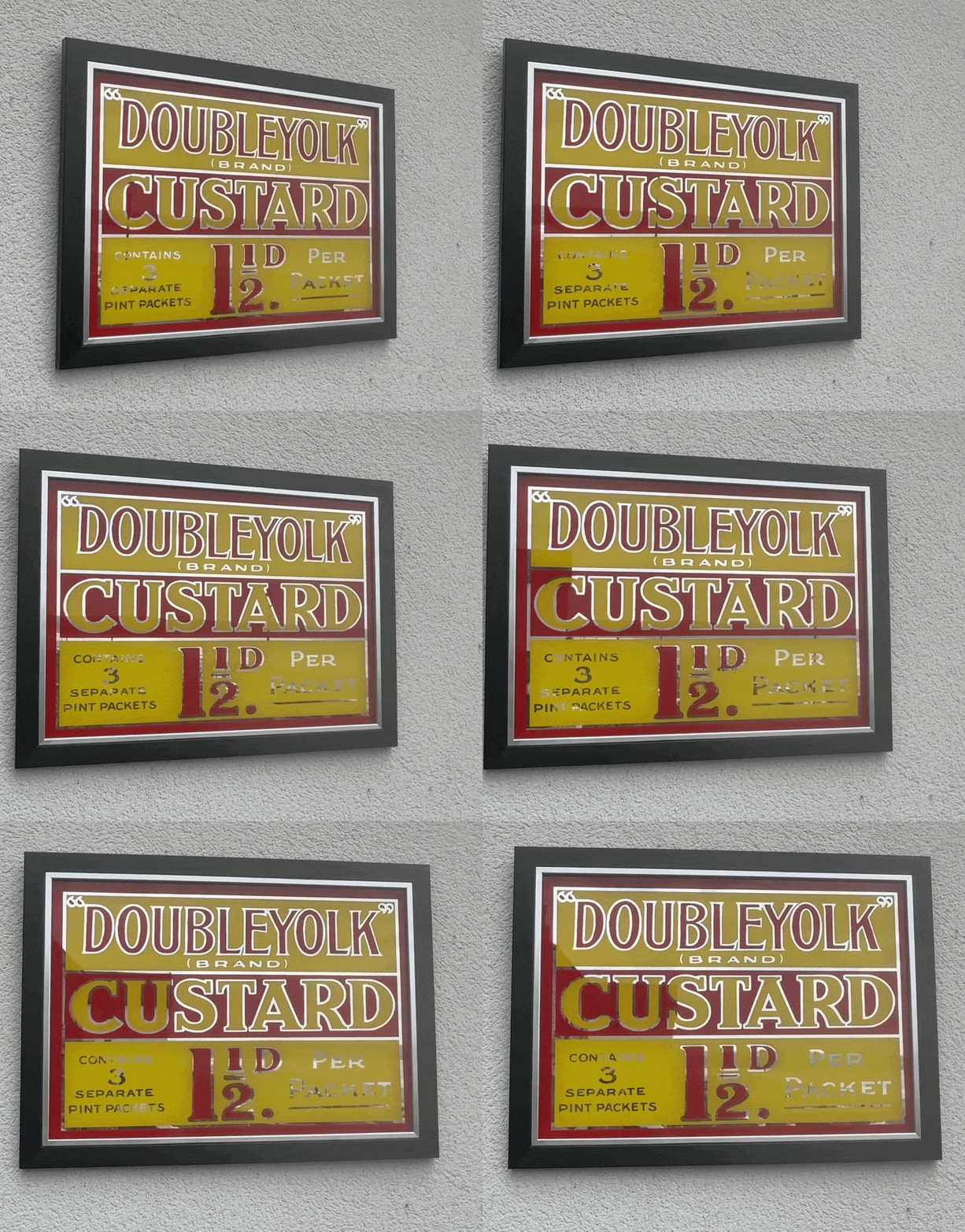 Image 2 of 3
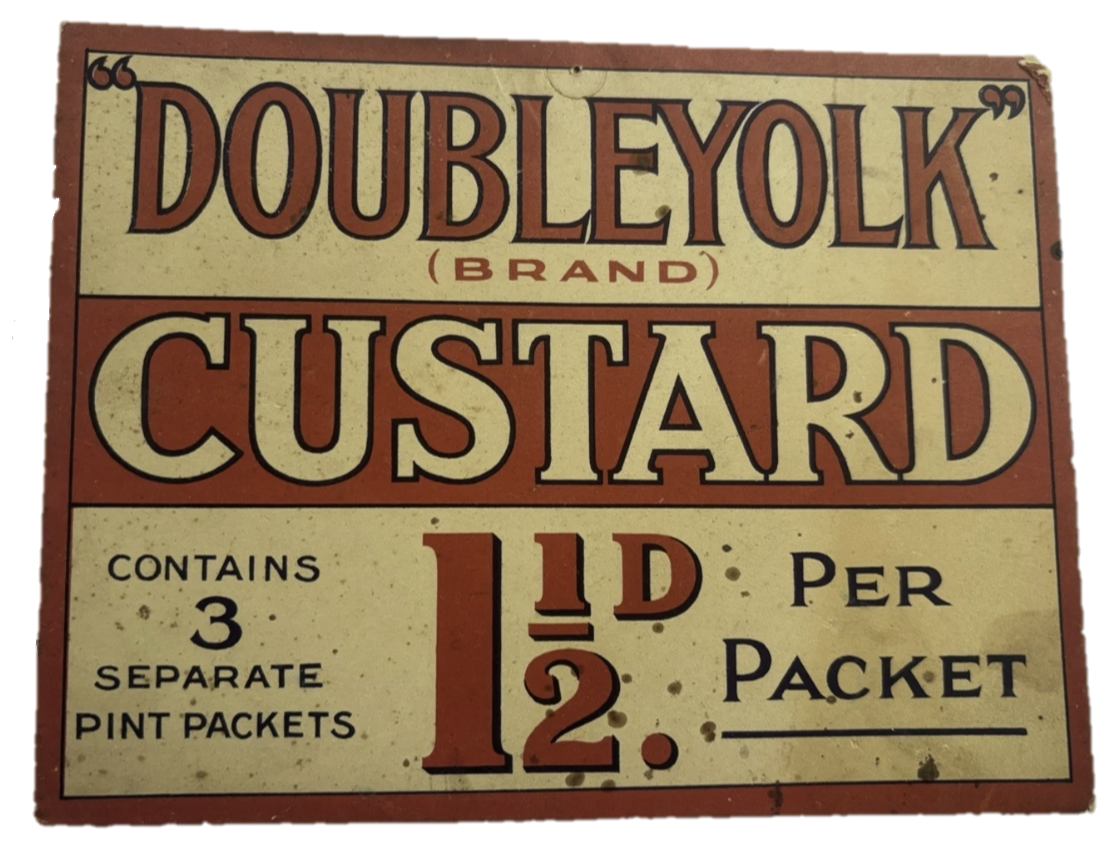 Image 3 of 3
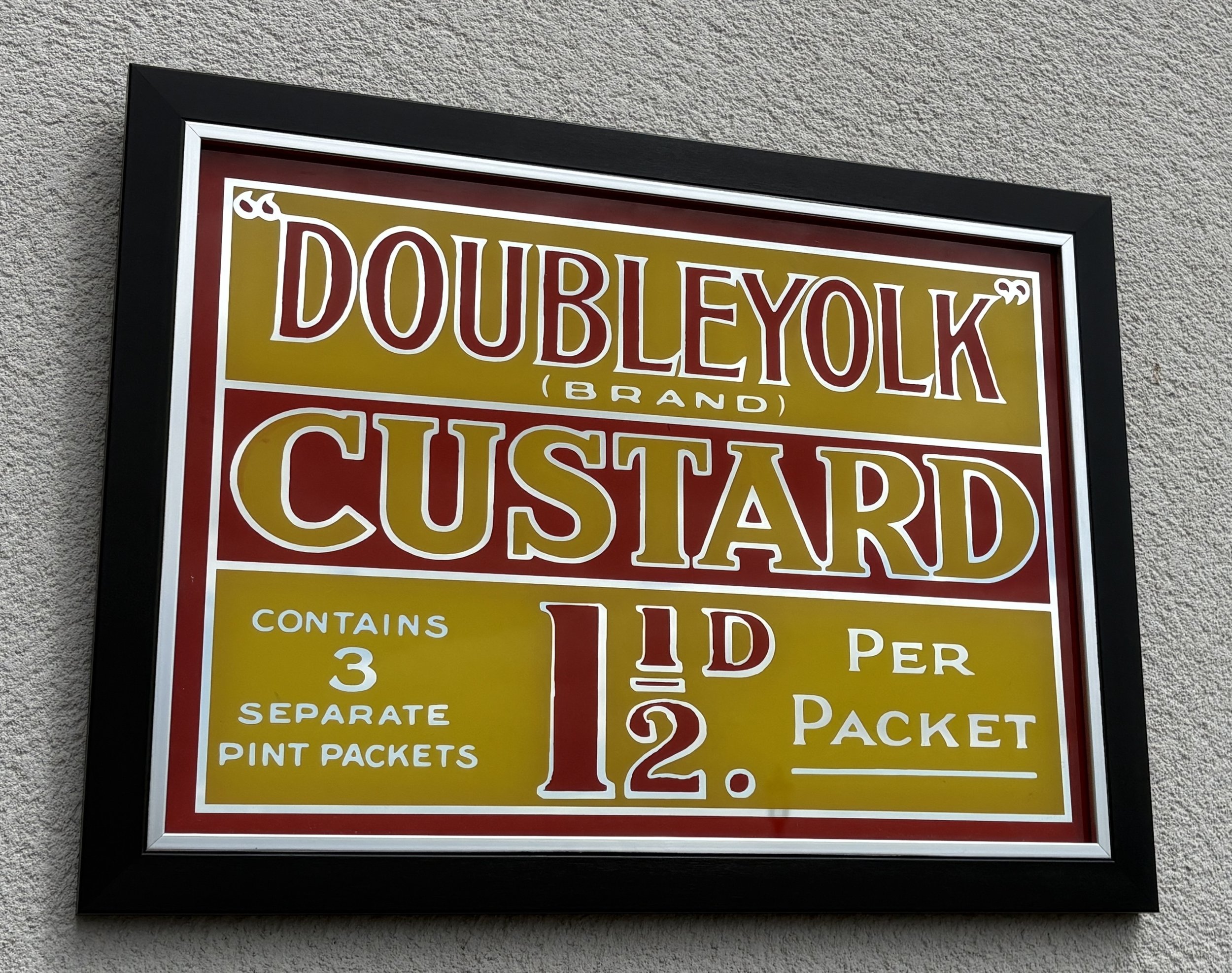
The early 1900s "Double Yolk Custard" sign was produced by The King’s Cross Baking Powder and Custard Company, a prominent food manufacturer based in London. The company specialized in late-Victorian and Edwardian chemical food innovations. They built a highly successful business model by manufacturing stable, powdered alternatives to perishable kitchen staples like yeast, eggs, and baking creams.
To aggressively compete with entrenched industry titans like Birmingham’s Bird's Custard, the King's Cross firm launched "Double Yolk" as its flagship custard brand. The clever name was a deliberate psychological marketing tactic, designed to convince working-class shoppers that the affordable, cornflour-based powder would yield a dessert as rich and golden as fresh, premium farm eggs.
The company invested heavily in manufacturing eye-catching, durable promotional signs to establish nationwide brand recognition. Although the company was eventually absorbed by larger conglomerates during the interwar consolidation of the British grocery market, this sign survives as a magnificent artifact representing early twentieth-century London industrialism, clever retail competition, and the dawn of commercial food branding.
Here we’ve taken an image of a worn card sign, digitally corrected it and reproduced it as a decorative reverse glass mirrored sign.
The early 1900s "Double Yolk Custard" sign was produced by The King’s Cross Baking Powder and Custard Company, a prominent food manufacturer based in London. The company specialized in late-Victorian and Edwardian chemical food innovations. They built a highly successful business model by manufacturing stable, powdered alternatives to perishable kitchen staples like yeast, eggs, and baking creams.
To aggressively compete with entrenched industry titans like Birmingham’s Bird's Custard, the King's Cross firm launched "Double Yolk" as its flagship custard brand. The clever name was a deliberate psychological marketing tactic, designed to convince working-class shoppers that the affordable, cornflour-based powder would yield a dessert as rich and golden as fresh, premium farm eggs.
The company invested heavily in manufacturing eye-catching, durable promotional signs to establish nationwide brand recognition. Although the company was eventually absorbed by larger conglomerates during the interwar consolidation of the British grocery market, this sign survives as a magnificent artifact representing early twentieth-century London industrialism, clever retail competition, and the dawn of commercial food branding.
Here we’ve taken an image of a worn card sign, digitally corrected it and reproduced it as a decorative reverse glass mirrored sign.