
 Image 1 of 3
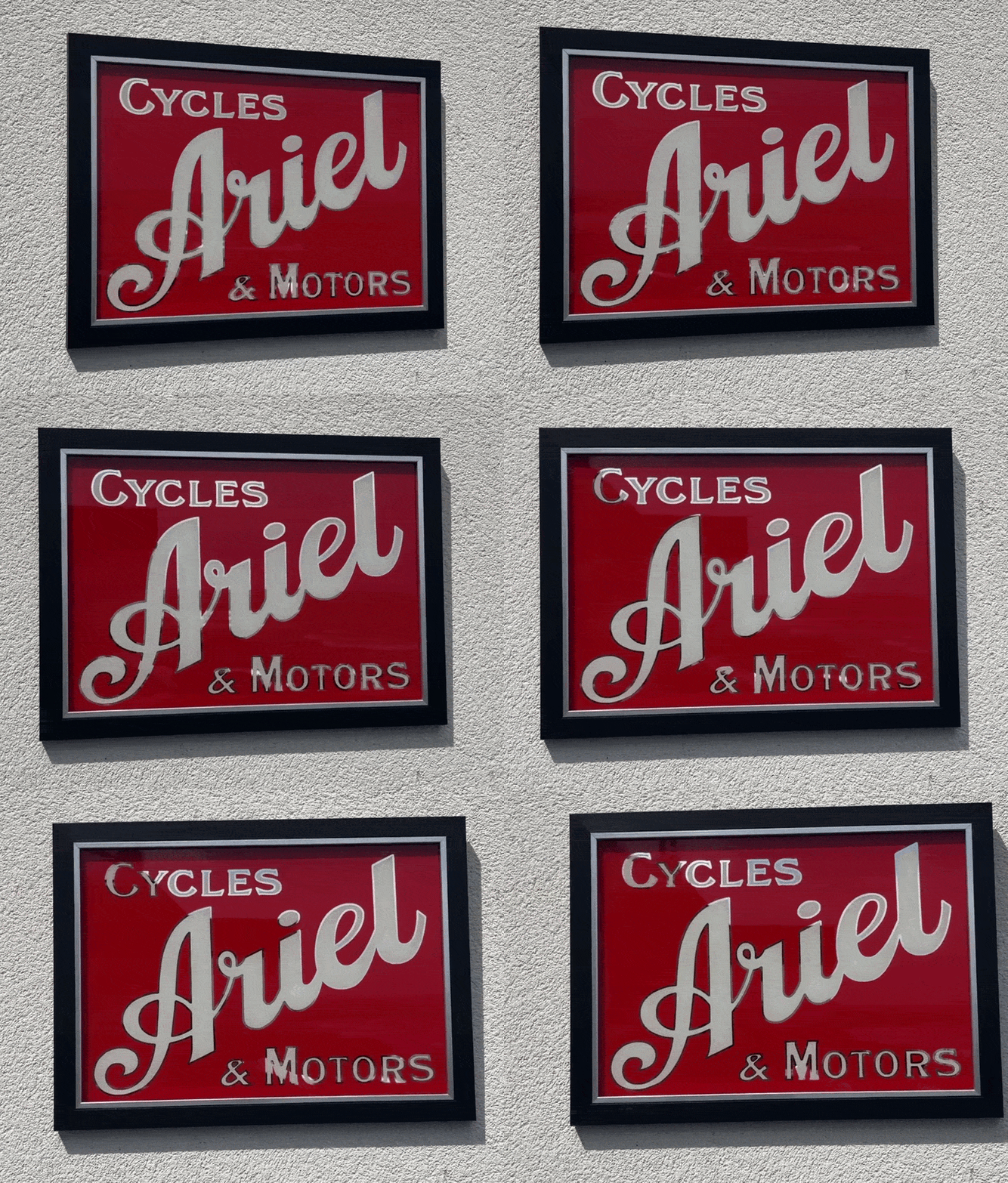 Image 2 of 3
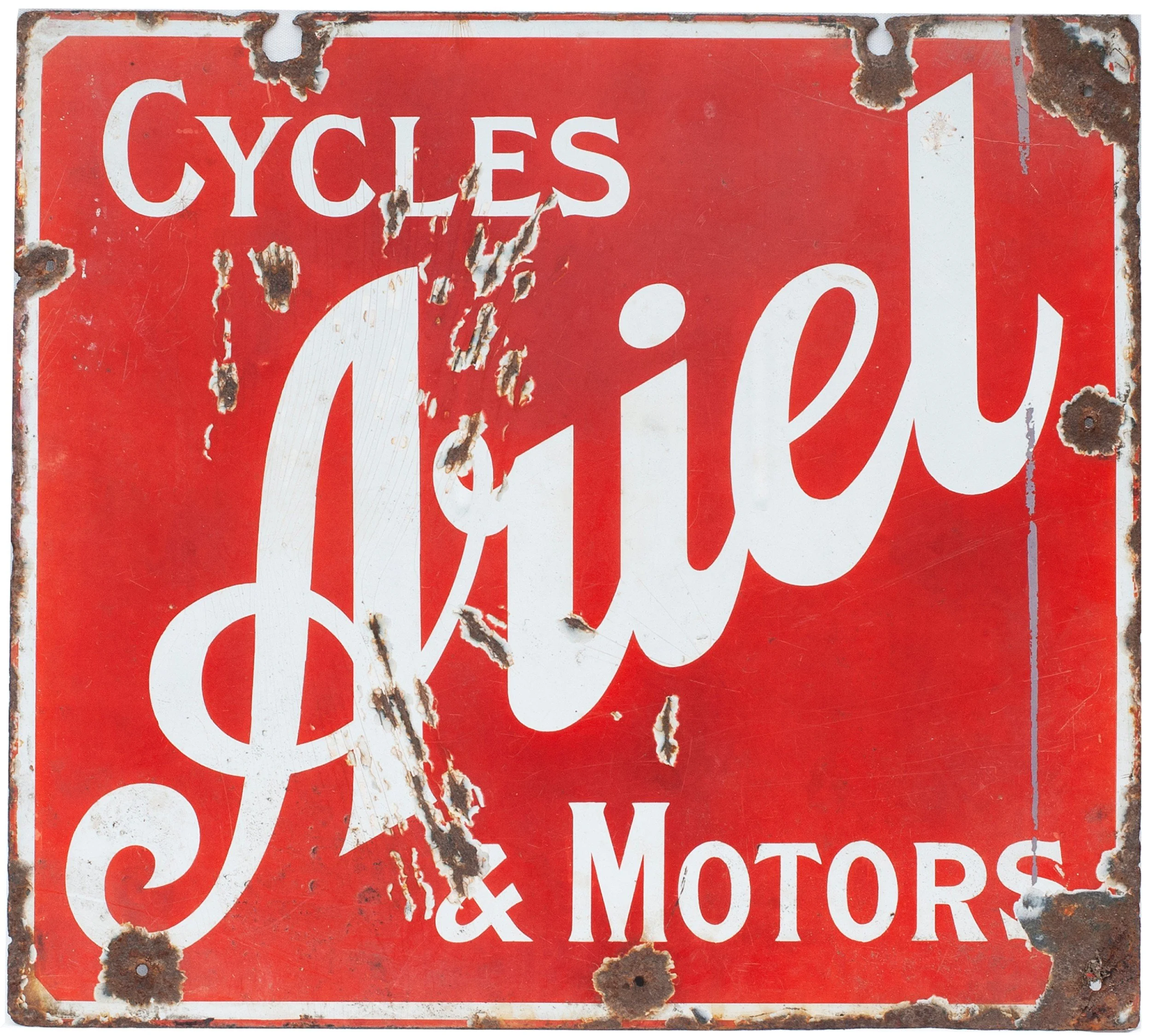 Image 3 of 3
Founded in 1870 in Birmingham, Ariel was an innovative giant of the British transport industry. The company was launched by James Starley, the "Father of the Bicycle Industry," and William Hillman, who patented a revolutionary all-metal Penny Farthing with lightweight wire-spoke wheels. They named the brand after the swift spirit in Shakespeare’s The Tempest.
By the late 1890s, Ariel merged with Components Ltd, expanding its nationwide manufacturing and dealership network. The company quickly evolved with the times, producing its first motorized tricycle in 1898 and its first official motorcycle in 1902. This successful transition into the motorized era gave rise to the unified branding of "Ariel Cycles and Motors" during the early 20th century.
Ariel achieved true legendary status in the 1930s by shifting its focus entirely to motorcycles. It introduced iconic models like the powerful Red Hunter and the engineering masterpiece known as the Ariel Square Four. Acquired by rival manufacturer BSA in 1944, Ariel continued to push design boundaries—including the futuristic, enclosed Leader motorcycle in 1958—before the historic brand name was finally retired from British two-wheel production in the late 1960s.
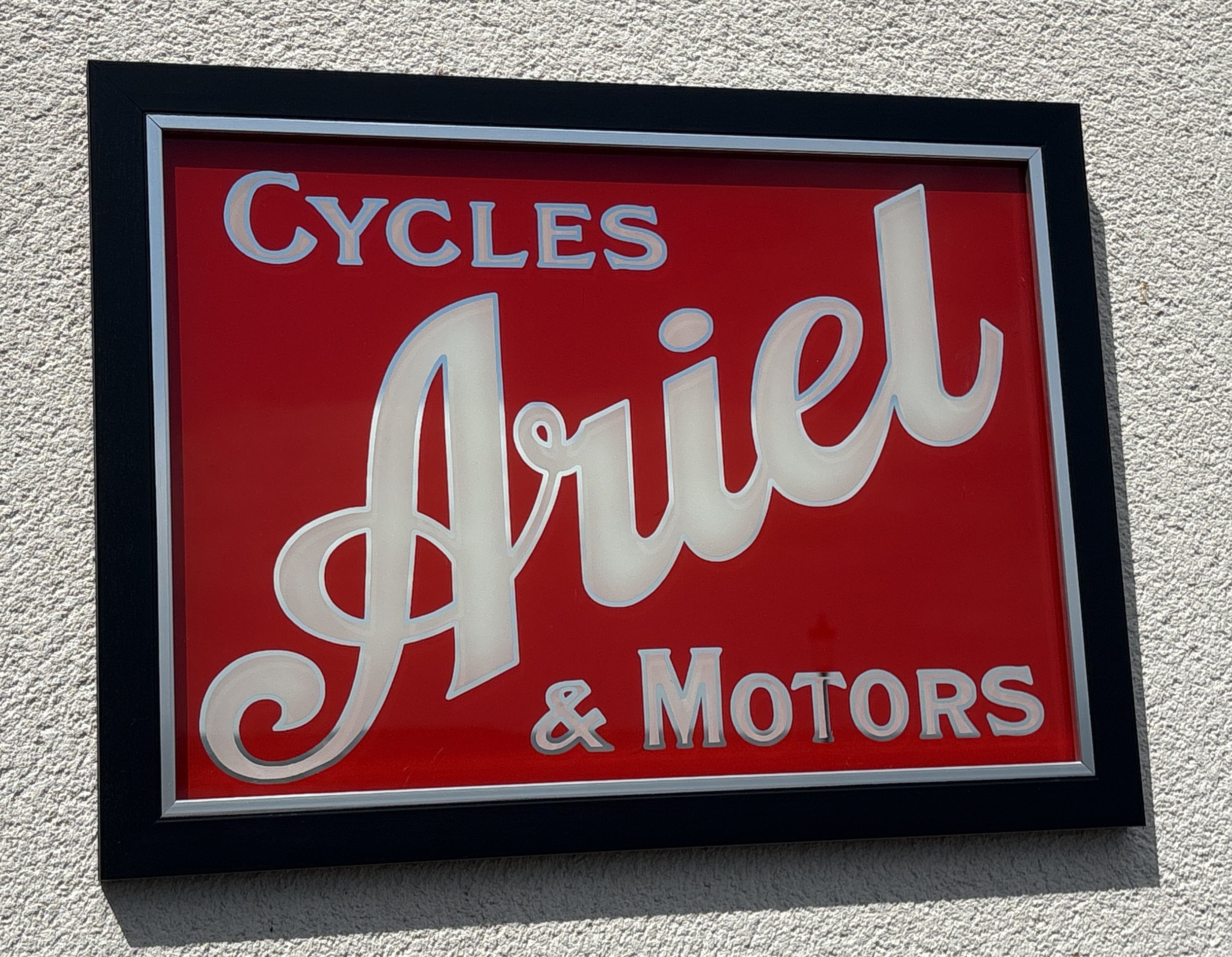
Here we’ve taken an image of a worn enamel sign, digitally corrected it and reproduced it as a decorative reverse glass mirrored sign.
Founded in 1870 in Birmingham, Ariel was an innovative giant of the British transport industry. The company was launched by James Starley, the "Father of the Bicycle Industry," and William Hillman, who patented a revolutionary all-metal Penny Farthing with lightweight wire-spoke wheels. They named the brand after the swift spirit in Shakespeare’s The Tempest.
By the late 1890s, Ariel merged with Components Ltd, expanding its nationwide manufacturing and dealership network. The company quickly evolved with the times, producing its first motorized tricycle in 1898 and its first official motorcycle in 1902. This successful transition into the motorized era gave rise to the unified branding of "Ariel Cycles and Motors" during the early 20th century.
Ariel achieved true legendary status in the 1930s by shifting its focus entirely to motorcycles. It introduced iconic models like the powerful Red Hunter and the engineering masterpiece known as the Ariel Square Four. Acquired by rival manufacturer BSA in 1944, Ariel continued to push design boundaries—including the futuristic, enclosed Leader motorcycle in 1958—before the historic brand name was finally retired from British two-wheel production in the late 1960s.
Here we’ve taken an image of a worn enamel sign, digitally corrected it and reproduced it as a decorative reverse glass mirrored sign.