
 Image 1 of 3
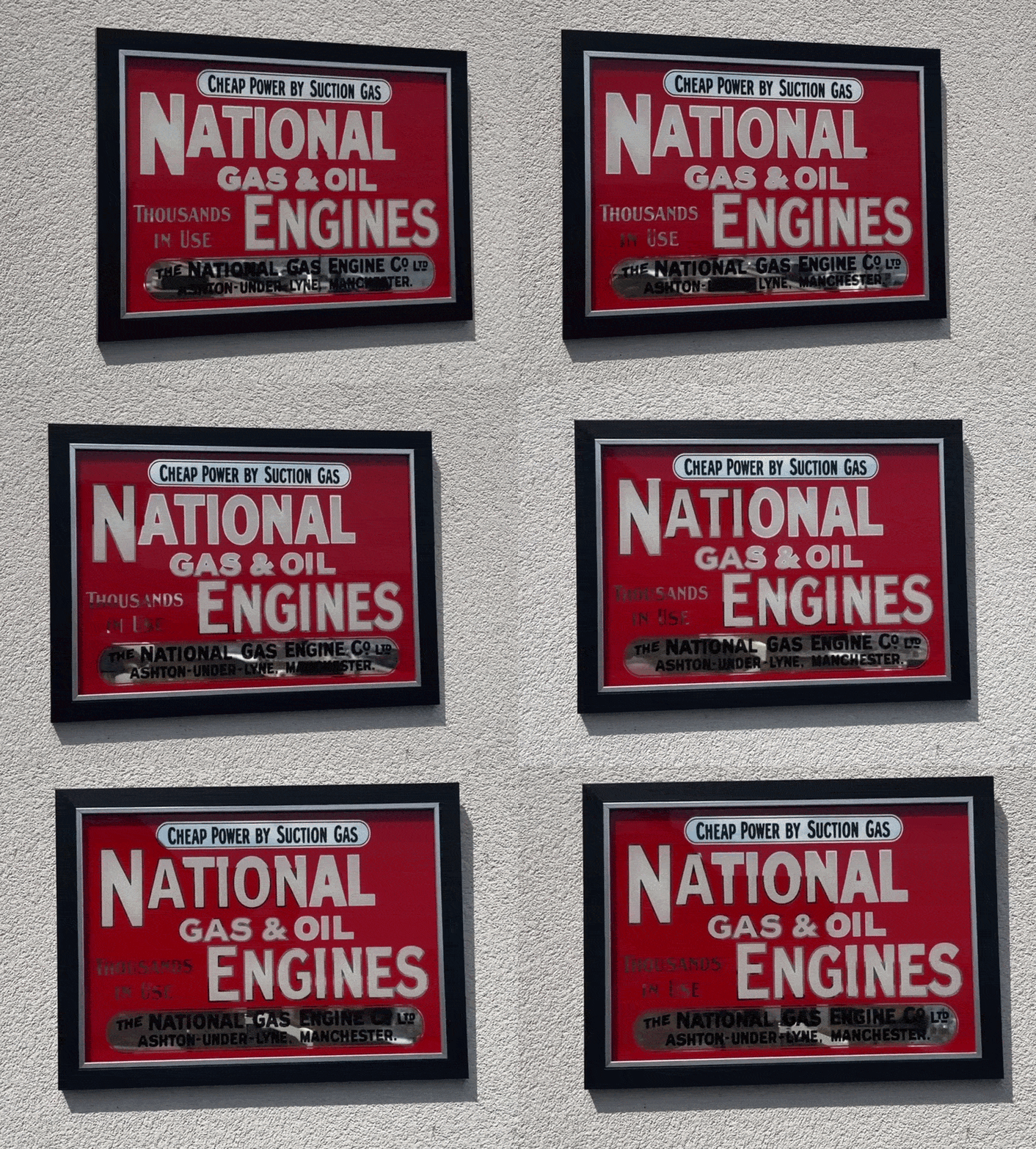 Image 2 of 3
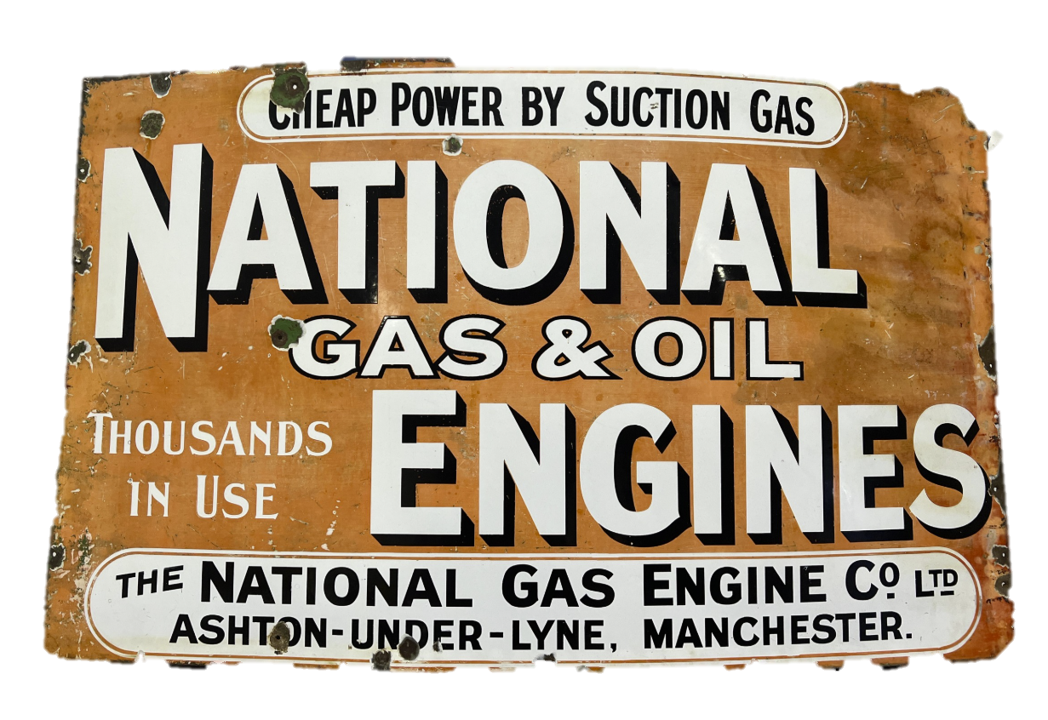 Image 3 of 3
The National Gas Engine Company was founded in 1889 by Henry Nield Bickerton in Ashton-under-Lyne, England. Alongside pioneering engineer Sir Douglas Clerk, the firm initially specialized in high-efficiency stationary gas engines fuelled by "town gas".
As heavy oil and diesel technologies advanced, the firm renamed itself the National Gas and Oil Engine Company in 1932. Six years later, in 1938, they made engineering history by introducing the world’s first successful dual-fuel engine, which could seamlessly switch between gas and diesel oil. This breakthrough became vital for global industrial power generation, particularly in municipal sewage works and remote oil fields.
During World War II, the company shifted to the war effort, manufacturing over 13,000 components for Lancaster bombers alongside their standard industrial powerplants. At its peak, the Wellington Works factory employed over 3,000 workers, making it a cornerstone of British manufacturing.
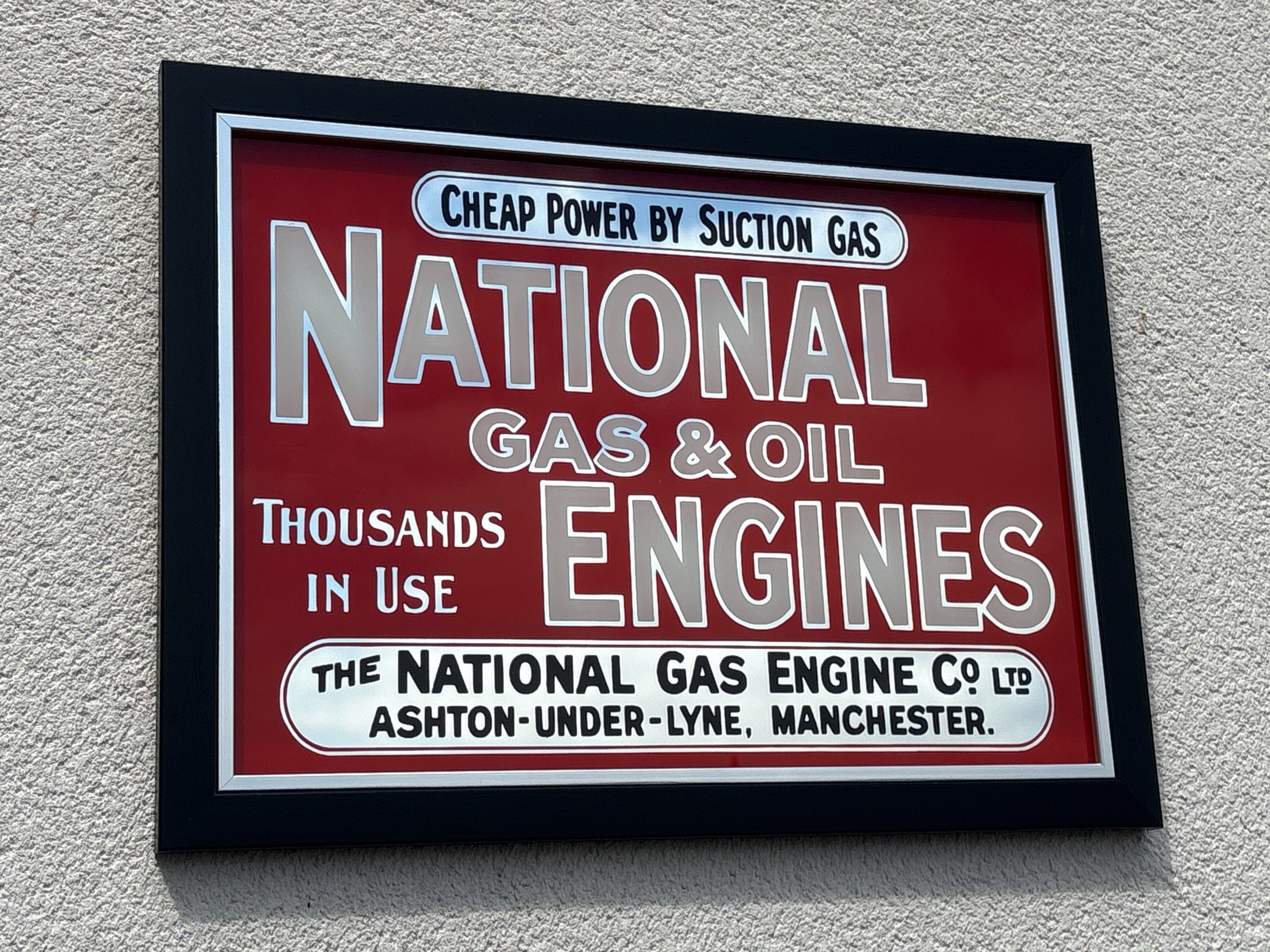
Here we’ve taken an image of a worn enamel sign, digitally corrected it and reproduced it as a decorative reverse glass mirrored sign.
The National Gas Engine Company was founded in 1889 by Henry Nield Bickerton in Ashton-under-Lyne, England. Alongside pioneering engineer Sir Douglas Clerk, the firm initially specialized in high-efficiency stationary gas engines fuelled by "town gas".
As heavy oil and diesel technologies advanced, the firm renamed itself the National Gas and Oil Engine Company in 1932. Six years later, in 1938, they made engineering history by introducing the world’s first successful dual-fuel engine, which could seamlessly switch between gas and diesel oil. This breakthrough became vital for global industrial power generation, particularly in municipal sewage works and remote oil fields.
During World War II, the company shifted to the war effort, manufacturing over 13,000 components for Lancaster bombers alongside their standard industrial powerplants. At its peak, the Wellington Works factory employed over 3,000 workers, making it a cornerstone of British manufacturing.
Here we’ve taken an image of a worn enamel sign, digitally corrected it and reproduced it as a decorative reverse glass mirrored sign.