
 Image 1 of 3
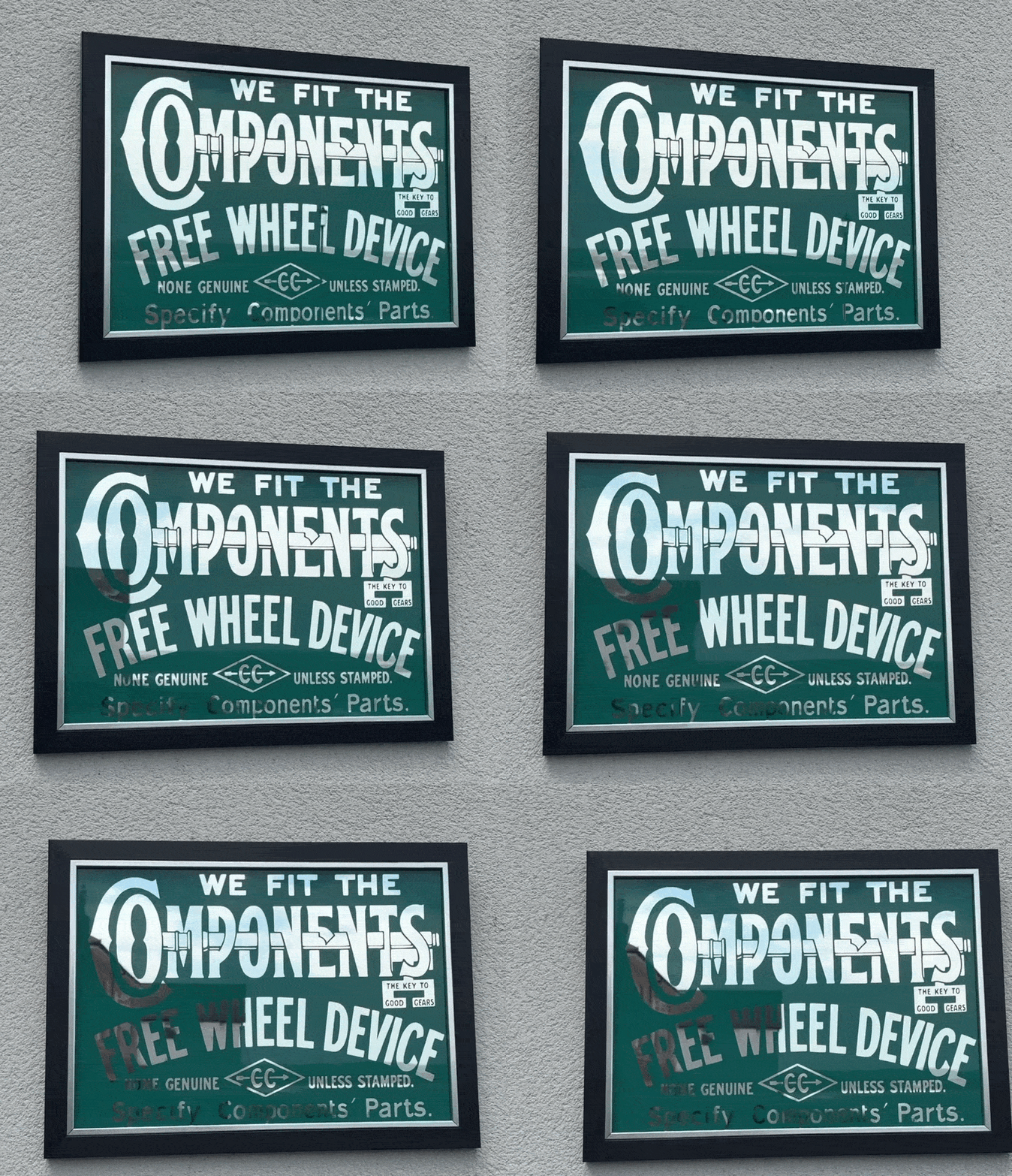 Image 2 of 3
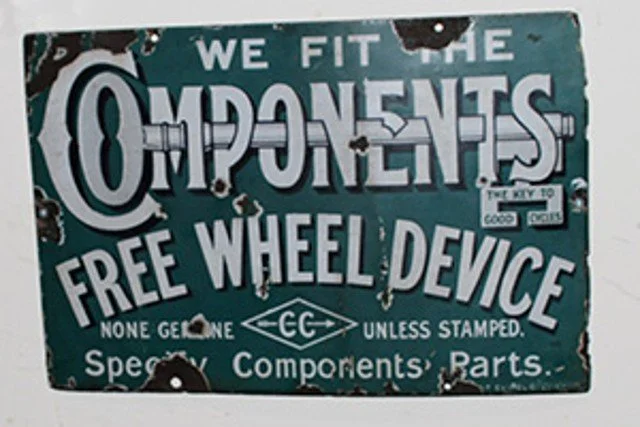 Image 3 of 3
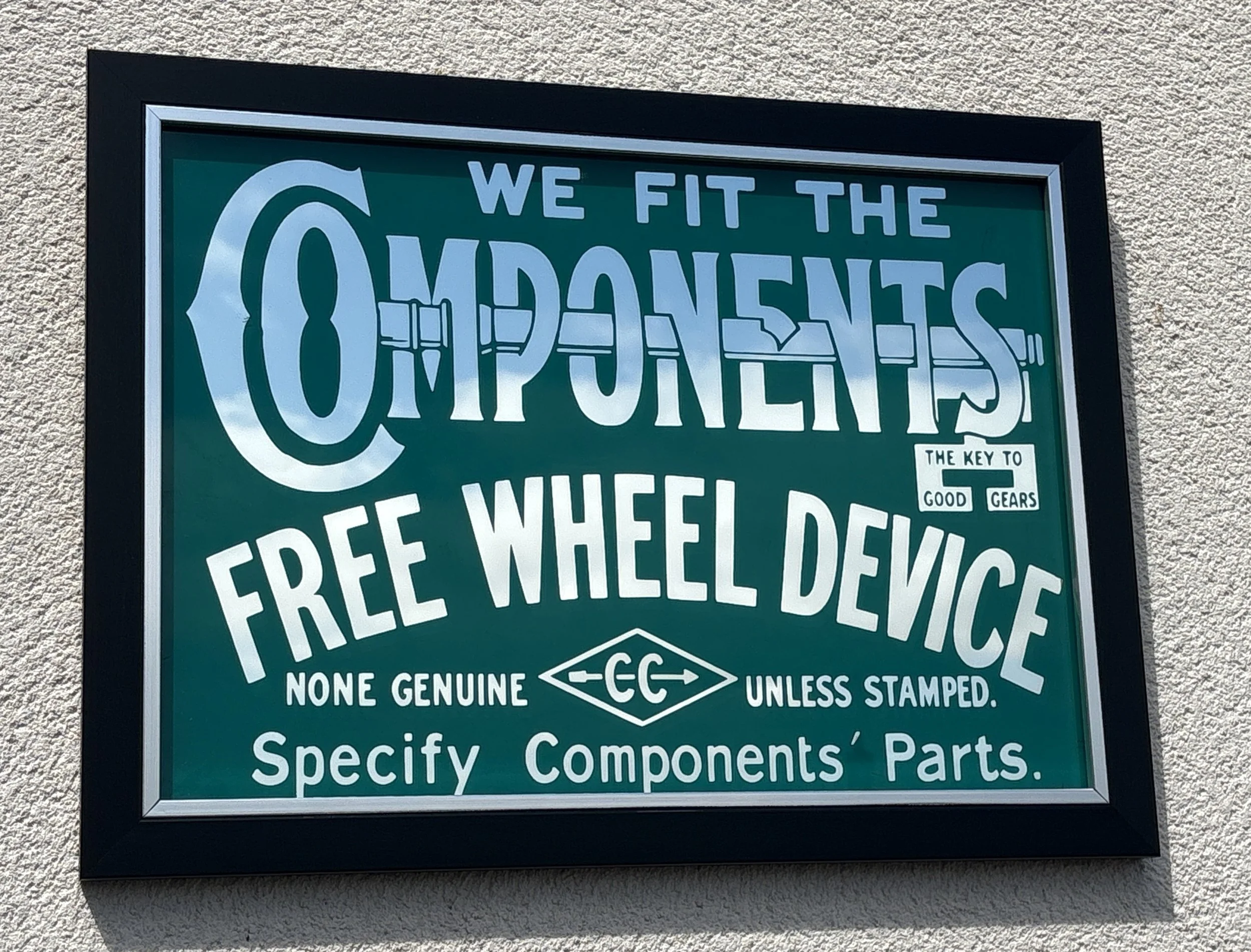
The "Components Free Wheel Device" sign represents a major technological milestone achieved by The Cycle Components Manufacturing Co. Ltd (later Components Ltd) of Bournbrook, Birmingham—the parent company that created the famous Ariel brand.
Manufactured between 1898 and 1902, this advertising sign captures the exact moment British bicycling transitioned into the modern era. Before this period, bicycles operated on dangerous "fixed gear" systems, requiring riders' legs to pedal continuously whenever the wheels were in motion, making downhill descents exhausting and highly hazardous.
To solve this, Components Ltd engineered and aggressively marketed their patented internal ratcheting clutch, branded directly on your sign as the "Free Wheel Device." This mechanical breakthrough allowed the rear wheel to rotate independently of the pedals, enabling cyclists to safely rest their feet and coast smoothly downhill for the very first time. Because free-wheel mechanisms rapidly became standard industry equipment by 1902, the need for specialized advertising quickly faded.
Here we’ve taken an image of a worn enamel sign, digitally corrected it and reproduced it as a decorative reverse glass mirrored sign.
The "Components Free Wheel Device" sign represents a major technological milestone achieved by The Cycle Components Manufacturing Co. Ltd (later Components Ltd) of Bournbrook, Birmingham—the parent company that created the famous Ariel brand.
Manufactured between 1898 and 1902, this advertising sign captures the exact moment British bicycling transitioned into the modern era. Before this period, bicycles operated on dangerous "fixed gear" systems, requiring riders' legs to pedal continuously whenever the wheels were in motion, making downhill descents exhausting and highly hazardous.
To solve this, Components Ltd engineered and aggressively marketed their patented internal ratcheting clutch, branded directly on your sign as the "Free Wheel Device." This mechanical breakthrough allowed the rear wheel to rotate independently of the pedals, enabling cyclists to safely rest their feet and coast smoothly downhill for the very first time. Because free-wheel mechanisms rapidly became standard industry equipment by 1902, the need for specialized advertising quickly faded.
Here we’ve taken an image of a worn enamel sign, digitally corrected it and reproduced it as a decorative reverse glass mirrored sign.